Lilli wanted to see if the timing screen was lying to us.
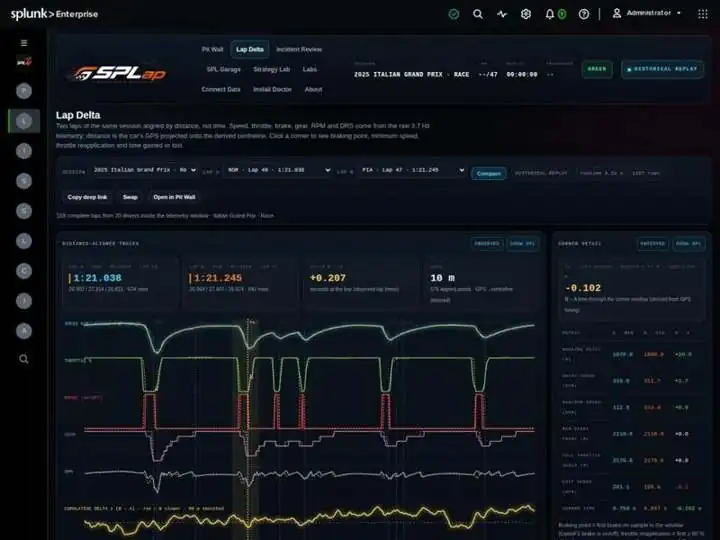
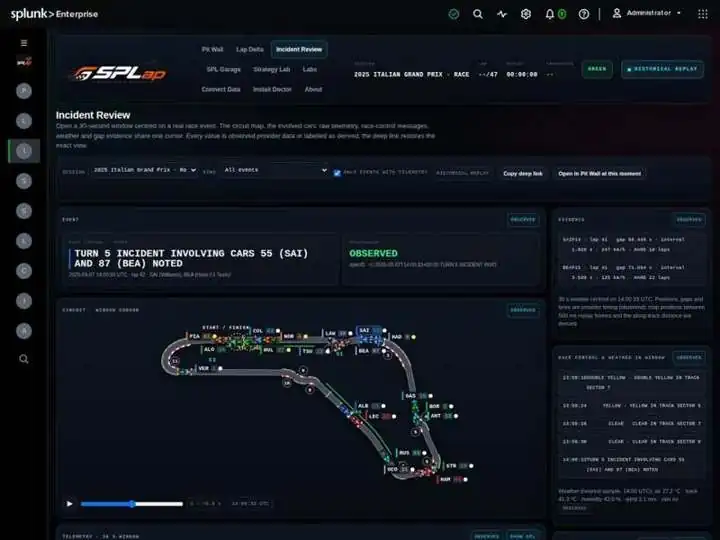
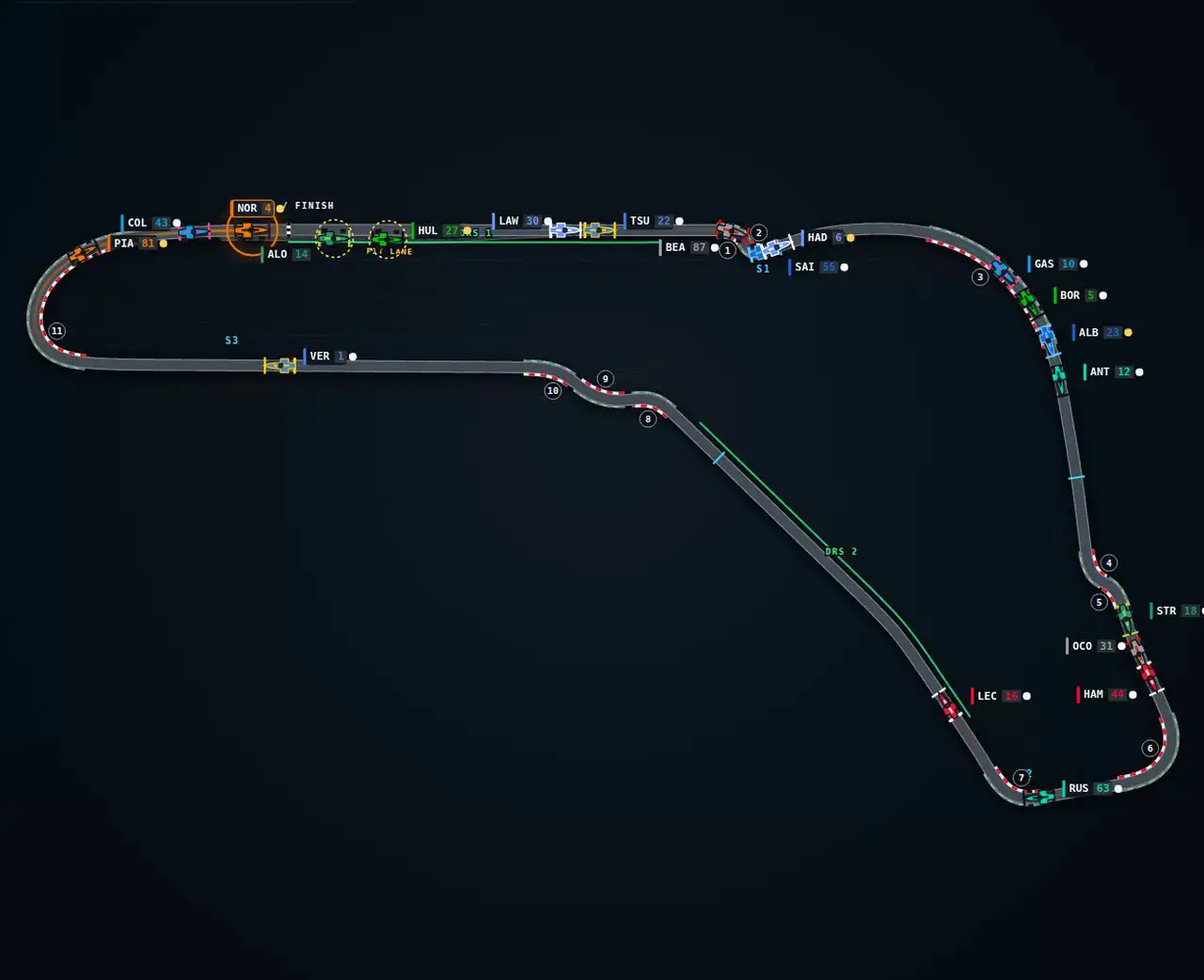
She also wanted to learn how real software gets built: the kind with tests and a release and strangers installing it. Lloyd wanted an excuse to model race physics. Neither of us expected the circuit map to come out of the cars' own GPS, or that a Monza pit stop would show up in the data as clearly as it does on TV.
Splunk turned out to be a great place to do it. It swallows a hundred thousand telemetry events without blinking, its search language was made for exactly these time-series questions, and its dashboards let us draw a race instead of a bar chart. We aren't affiliated with Splunk in any way; we just think it's a good platform for this.
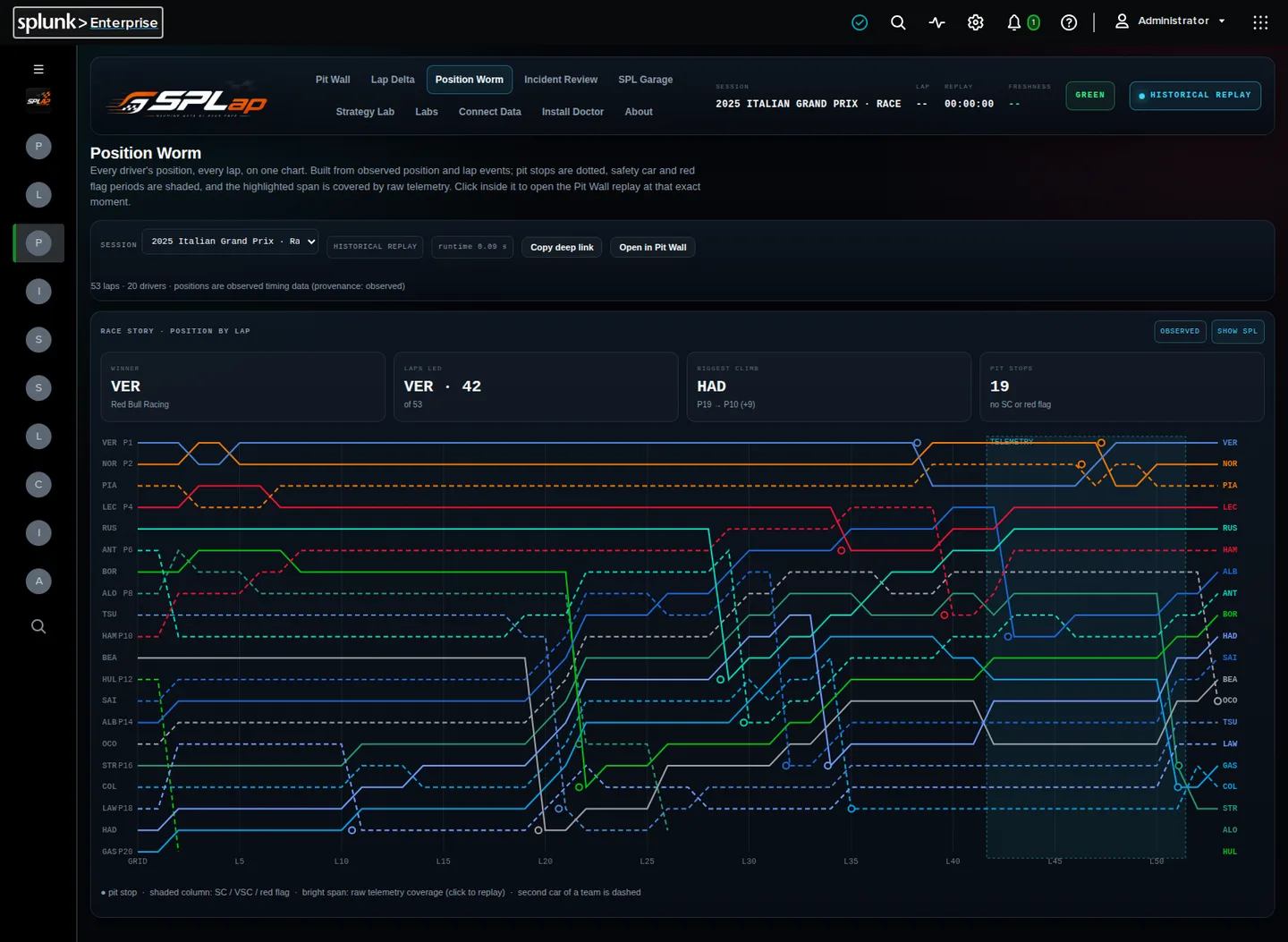
What is on Splunkbase today is the groundwork: a clean data model, a real session, the whole race on one chart, deterministic race-engineer findings you can check. The physics is next.